About PA Guide

I built PA Guide because chaos is not a study strategy — and my family was not negotiable.

PA school is hard. No argument there. But I never bought the idea that the answer was to complain, drown, and hope the school eventually fixed it for me. I needed a plan that protected my marriage, my family, my health, and my future patients. That is why PA Guide exists.

PA Guide was built for students who want to take ownership of the way they learn medicine.

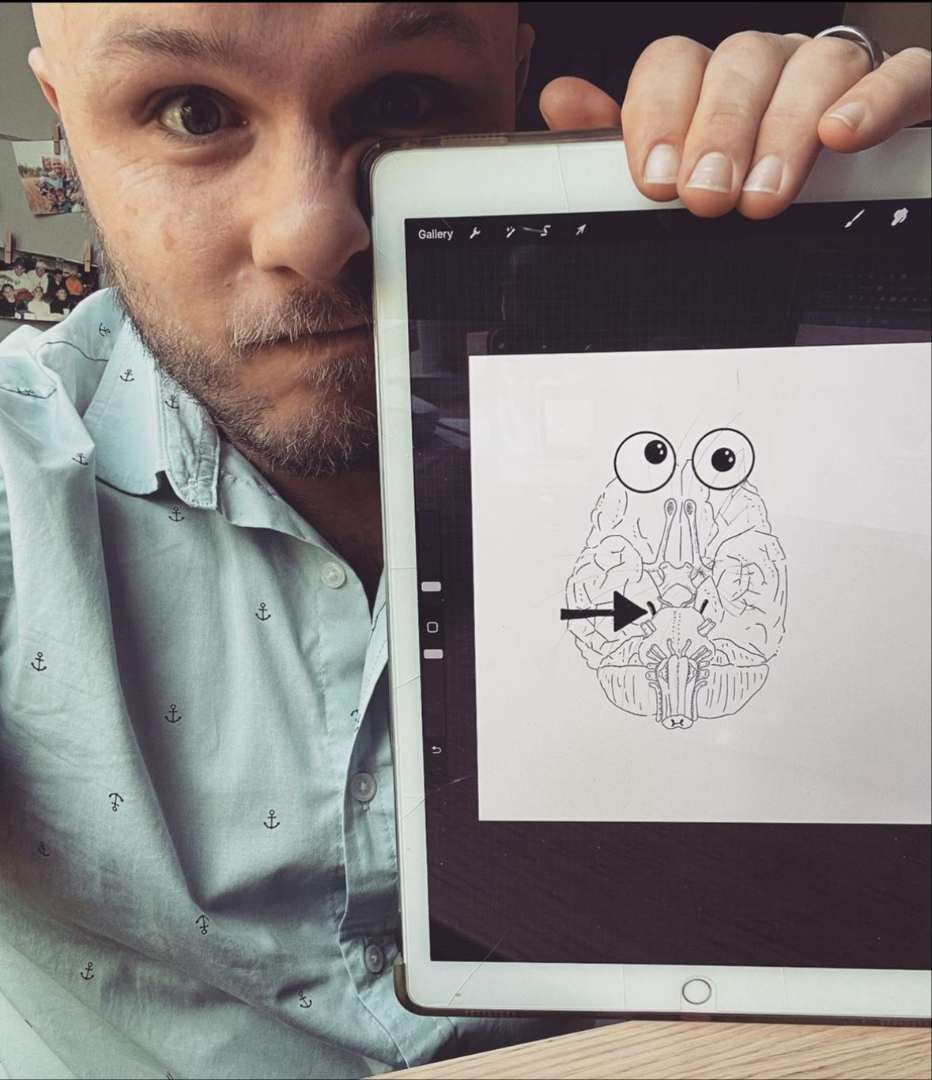
Jono creating PA Guide illustrations on an iPad
The first version was not fancy. It was ownership. I believed the evidence behind handwriting, so I stopped waiting for someone else to make the perfect system. I built one.

You are the one doing the work. PA Guide is the system that helps the work pay off.

I am not trying to be the hero of your PA school story. You are. My job is to give you a clearer plan, better structure, and tools that help you stop spinning your wheels.

View Options
Jono, founder of PA Guide, outdoors in Eastern Washington
PA Guide was built from real pressure, not theory. Marriage, family, PA school, clinical training, and the decision to build a system instead of waiting for one.
My story

I built PA Guide because I needed a plan that would not cost me my family or my health.

PA school was hard. That was not the surprise. The problem was watching chaos get treated like a personality trait instead of something that needed a system.

I went through PA school as a husband and father. At the start, I had one daughter. By graduation, I had two more. That forced me to decide what was actually allowed to win.

No school, career, degree, or title was going to win a fight against my marriage, my family, or my health. I wanted to become a strong clinician, but I was not willing to become a worse husband, father, or person to get there.

I also got tired of hearing the same complaint: “The school is not doing enough for us.” Sometimes that may have been true. But waiting around for someone else to fix my learning was not a strategy.

So I took ownership of the part I could control. I believed the evidence behind handwriting. I started turning lectures into structured notes, then structured review, then a full system for organizing medicine.

That system became PA Guide: a practical way to help PA students stop reacting to the chaos and start learning with a plan.

Principle 01Hard does not have to mean chaotic.
Principle 02Ownership beats complaining every time.
Principle 03Clinical reasoning needs structure, not just more content.
How it developed

From overwhelmed student to clinical learning system.

PA Guide grew in stages. That is part of why it feels different from a generic board review product.

1

I refused to sacrifice the wrong things.

PA school mattered, but it was not allowed to beat my marriage, my family, or my health.

2

Ownership became the answer.

I stopped waiting for the perfect resource and started building the structure I needed.

3

The notebook became the backbone.

The PA Guide Board Review Notebook grew from a personal study system into a reusable framework.

4

Clinical work sharpened the mission.

Emergency medicine, interventional medicine, rural care, and teaching all pointed back to one need: better clinical reasoning.

What PA Guide became

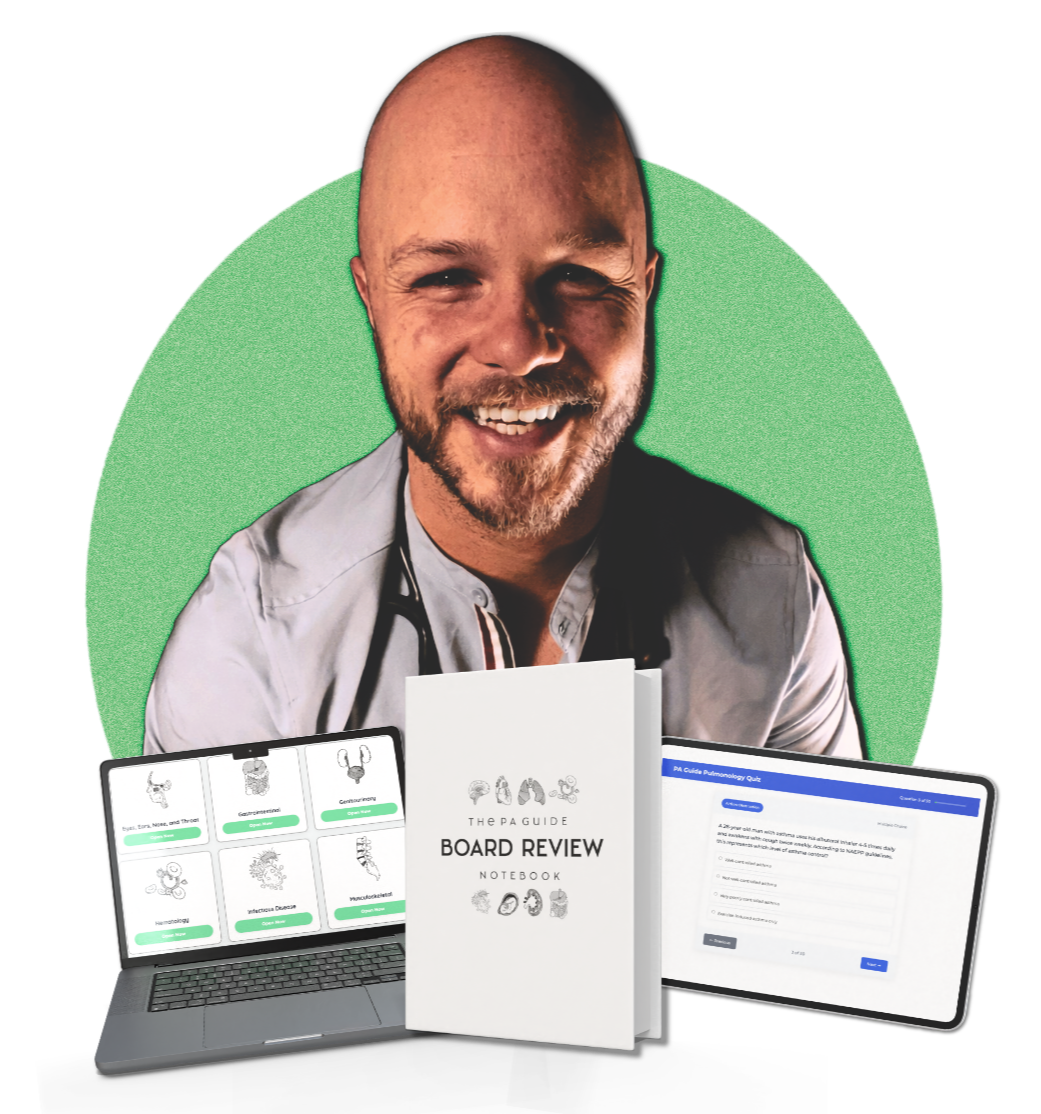
The notebook is the backbone. The platform is the training system.

Most PA students already have access to enough information. That is not the problem. The problem is ownership and organization. Scattered information does not turn into clinical confidence by magic.

PA Guide combines a physical notebook with a digital course, quizzes, flashcards, AI clinical reasoning support, and review tools. It is designed to help you stop collecting information and start building usable clinical knowledge.

The goal is not to make studying look impressive. The goal is to make it work under pressure.

PA Guide Board Review Notebook on a wooden desk
The system

Three pieces. One purpose.

Each part of PA Guide has a job. Together, they create a learning system that is much harder to fake than passive rereading, endless question grinding, or blaming the school for not handing you the perfect plan.

📓

The notebook organizes the medicine.

You build one central reference instead of letting lectures, PDFs, and outside resources scatter everywhere.

  • System-based organization
  • Handwriting-friendly review
  • Built for PA school and PANCE prep
🎓

The course clarifies the concepts.

The lessons help you focus on patterns, clinical decision-making, and the high-yield medicine that actually matters.

  • Clear explanations
  • Clinical framing
  • Less noise, more structure
🤖

The tools create the reps.

Quizzes, flashcards, and AI support help you retrieve information and reason through clinical scenarios.

  • Active recall
  • Clinical reasoning practice
  • Useful during school, rotations, boards, and practice
Teaching proof

I do not just sell education. I teach it.

“10/10. Great lecturer and down to earth guy giving great pearls about his current practice and how he deals with patients.”
“Absolutely loved this lecture and the content!”
“Best presenter I’ve seen at the conference.”
“Excellent presentation, engaging and informative. Excellent speaker!”
“This was a great presentation. You made the information easy to understand.”
“Very entertaining speaker and could tell he was very eager to teach!”
Jono Lippman, PA Guide founder and PA educator
Who PA Guide helps

Different stages. Same need for structure.

PA Guide is useful across the physician assistant training and practice pathway.

PA students

For students

If you feel behind, overwhelmed, or unsure how to organize PA school content, PA Guide gives you a path forward.

If you are already doing well, it helps you start ahead and keep your system clean before clinical rotations or the PANCE.

Practicing PAs

For clinicians

Practicing PAs can use PA Guide as a practical clinical review system for refreshers, teaching, onboarding, and lifelong learning.

It is especially useful for new grads, preceptors, and PAs using CME funds for education.

Programs + faculty

For programs

PA programs can use PA Guide to give students a shared framework for studying, remediation support, and clinical reasoning development.

It gives faculty something more structured to point students toward before they are in crisis.

FAQ

Questions people ask about PA Guide.

Clear answers for PA students, practicing PAs, faculty, and programs considering PA Guide.

What is PA Guide?

PA Guide is a physician assistant study system that combines a physical Board Review Notebook, online course content, quizzes, flashcards, AI-supported clinical reasoning tools, and structured review resources. It helps PA students organize medical knowledge, prepare for exams, strengthen clinical reasoning, and study for the PANCE without relying on scattered resources alone.

Who created PA Guide?

I created PA Guide from my own experience as a husband, father, PA student, clinician, and teacher. I did not want PA school to win a battle against my marriage, family, or health, and I got tired of waiting for someone else to build the perfect study system. The system grew out of handwritten study methods, clinical practice, emergency medicine experience, interventional medicine work, rural care, and years of helping students understand medicine more clearly.

Is PA Guide for PA students who are struggling?

Yes. PA Guide is especially helpful for PA students who feel overwhelmed, behind, anxious, or unsure how to organize the volume of PA school content. It gives students a clearer structure for didactic year, clinical year, rotations, and board review. It is also useful for students who are doing well but want to start ahead with a stronger study system.

Is PA Guide only for PANCE prep?

No. PA Guide can be used for PANCE prep, but it is not only a PANCE review course. The goal is to help students learn medicine throughout PA school, organize their notes, review by system, practice active recall, and develop clinical reasoning before board exam season arrives.

How is PA Guide different from a qbank?

A qbank tests what you know. PA Guide helps build the structure you use before, during, and after question practice. PA students often need more than answer explanations. They need a place to organize concepts, review core medicine, connect patterns, and reason clinically. PA Guide can make qbanks more useful because students have a framework to attach missed questions to instead of just collecting explanations they never truly own.

What is included in the PA Guide Board Review Notebook?

The PA Guide Board Review Notebook is a physical study notebook designed around high-yield physician assistant medicine. It gives students a structured place to organize clinical systems, write notes, review important concepts, and build a reference they can return to during PA school, rotations, PANCE prep, and clinical practice.

Does PA Guide help with clinical reasoning?

Yes. PA Guide is built around clinical reasoning, not just memorization. The notebook, lessons, quizzes, flashcards, AI support, and clinical tools help students move from facts to patterns, decisions, next steps, and board-style reasoning.

Can practicing PAs use PA Guide?

Yes. Practicing PAs can use PA Guide as a clinical review library, teaching tool, onboarding resource, or professional education system. It can be useful for new graduate PAs, experienced PAs, preceptors, emergency medicine clinicians, primary care clinicians, and anyone who wants a structured way to review medicine.

Can I use CME funds for PA Guide?

PA Guide has a practicing PA pathway designed for clinicians who want to use professional education or CME funds for a practical review system. Every employer and CME policy is different, so clinicians should confirm reimbursement rules with their employer or CME administrator before purchasing.

Does PA Guide work for PA programs and faculty?

Yes. PA Guide offers program options for PA faculty, professors, and program directors who want to support students with a shared study framework. It can help programs give students a consistent system for organization, clinical reasoning, PANCE preparation, and remediation support.

How can PA programs use PA Guide for remediation?

Programs can use PA Guide as a structured support tool for students who are falling behind or struggling to organize the material. Instead of giving students more disconnected resources, faculty can point them toward a repeatable study system that includes a notebook, digital tools, clinical reasoning support, and system-based review.

Is PA Guide online or physical?

PA Guide includes both physical and digital components. The Board Review Notebook gives students a tangible study system, while the online platform adds course content, quizzes, flashcards, AI tools, and digital review support. The combination helps students write, organize, retrieve, and apply what they learn.

Is PA Guide useful during clinical rotations?

Yes. PA Guide is designed to help students carry organized knowledge from didactic year into clinical rotations. The review system can support clinical thinking, common diagnoses, exam preparation, and board review during family medicine, emergency medicine, internal medicine, surgery, pediatrics, women’s health, behavioral health, and other rotations.

Where is PA Guide based?

PA Guide was built in the Spokane, Washington area, but it is designed for PA students, practicing physician assistants, and PA programs across the United States. The platform can be accessed online, and physical notebooks can support learners far beyond Washington.

What is the best way to start with PA Guide?

Students who want the full system usually choose Lifetime Access. Students who want a lower-friction start can begin with the Board Review Notebook and monthly access. Practicing PAs can review the CME pathway, and PA programs can review the Essential, Partner, and Premier program options.

PA Guide supports PA school study strategy, PANCE preparation, clinical reasoning, CME review, and program-level student support.
If it feels like a fit

Choose the PA Guide path that makes sense for you.

Start with the path that fits where you are right now.

Lower-friction start

Notebook + Monthly

For students who want the Board Review Notebook now and ongoing access to the tools.

$97+ $19/mo
  • Board Review Notebook
  • Monthly platform access
  • Quizzes + flashcards + AI
  • Cancel anytime
Start Monthly →
Practicing PA

CME Path

For PAs who want a useful review system for practice, teaching, onboarding, and lifelong learning.

CMEoption
  • Built for practicing clinicians
  • Useful for new grads and experienced PAs
  • Supports teaching and review
  • Education-focused pathway
View CME Option →
Programs

Faculty + Cohorts

For PA programs that want a clearer, more structured support system for their students.

Plansavailable
  • Essential, Partner, Premier
  • Student notebook + digital access
  • Faculty support options
  • Designed for cohort implementation
View Program Plans →