What is PA Guide?
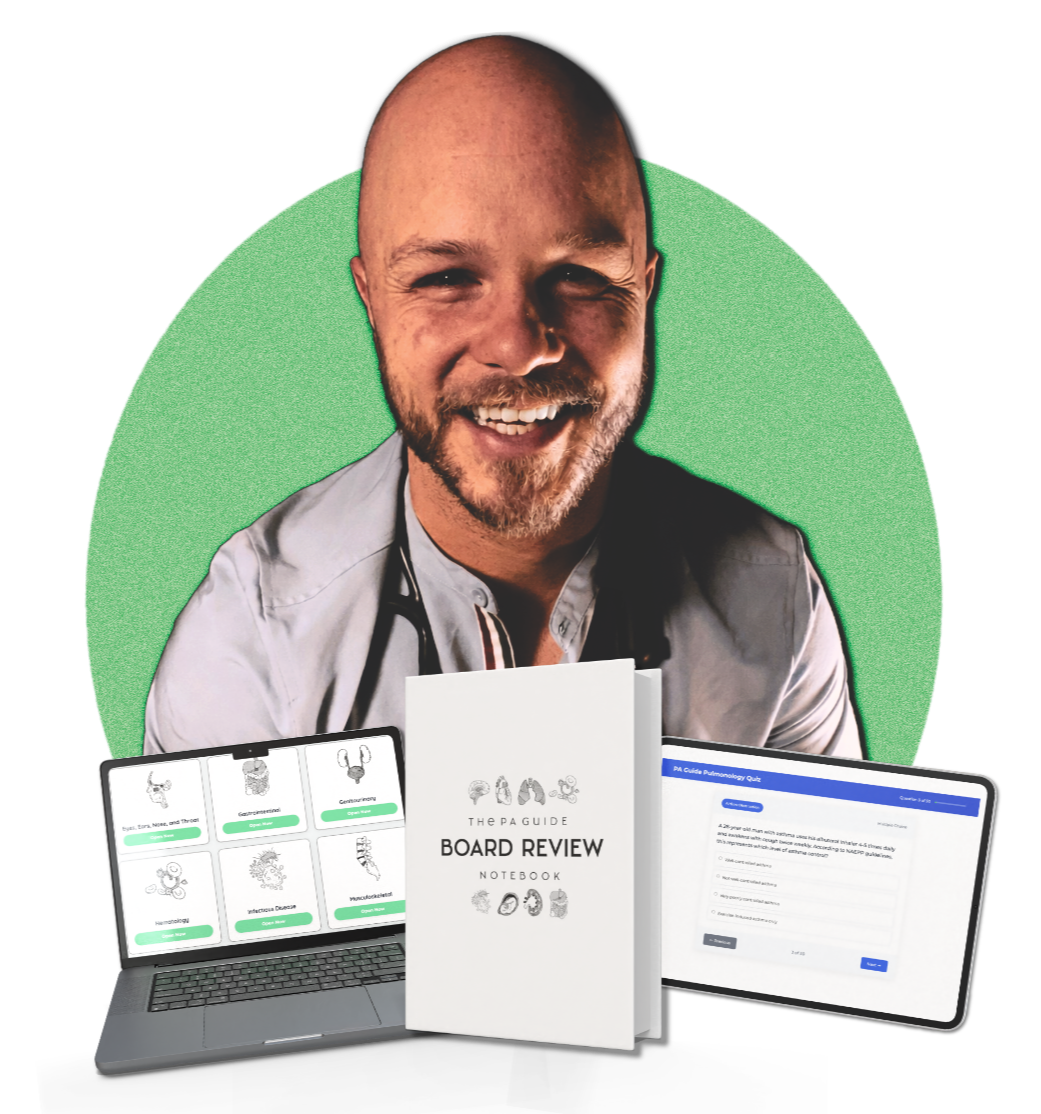
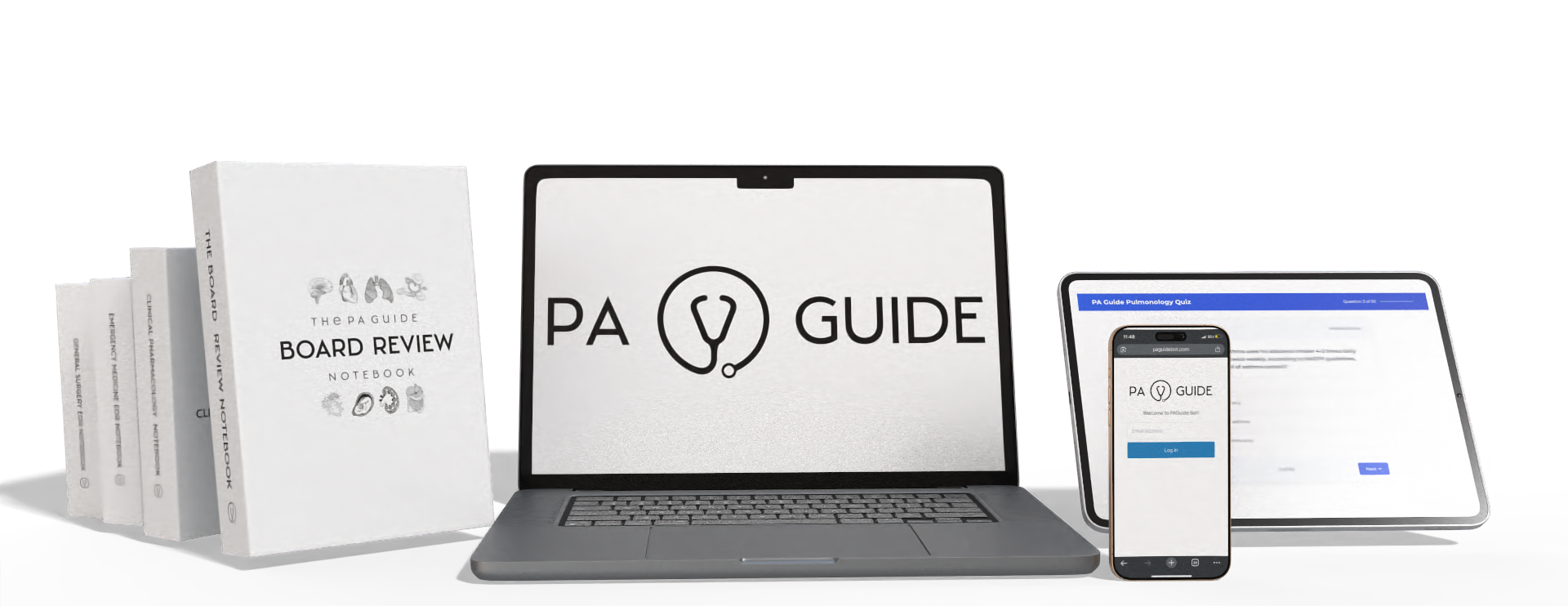
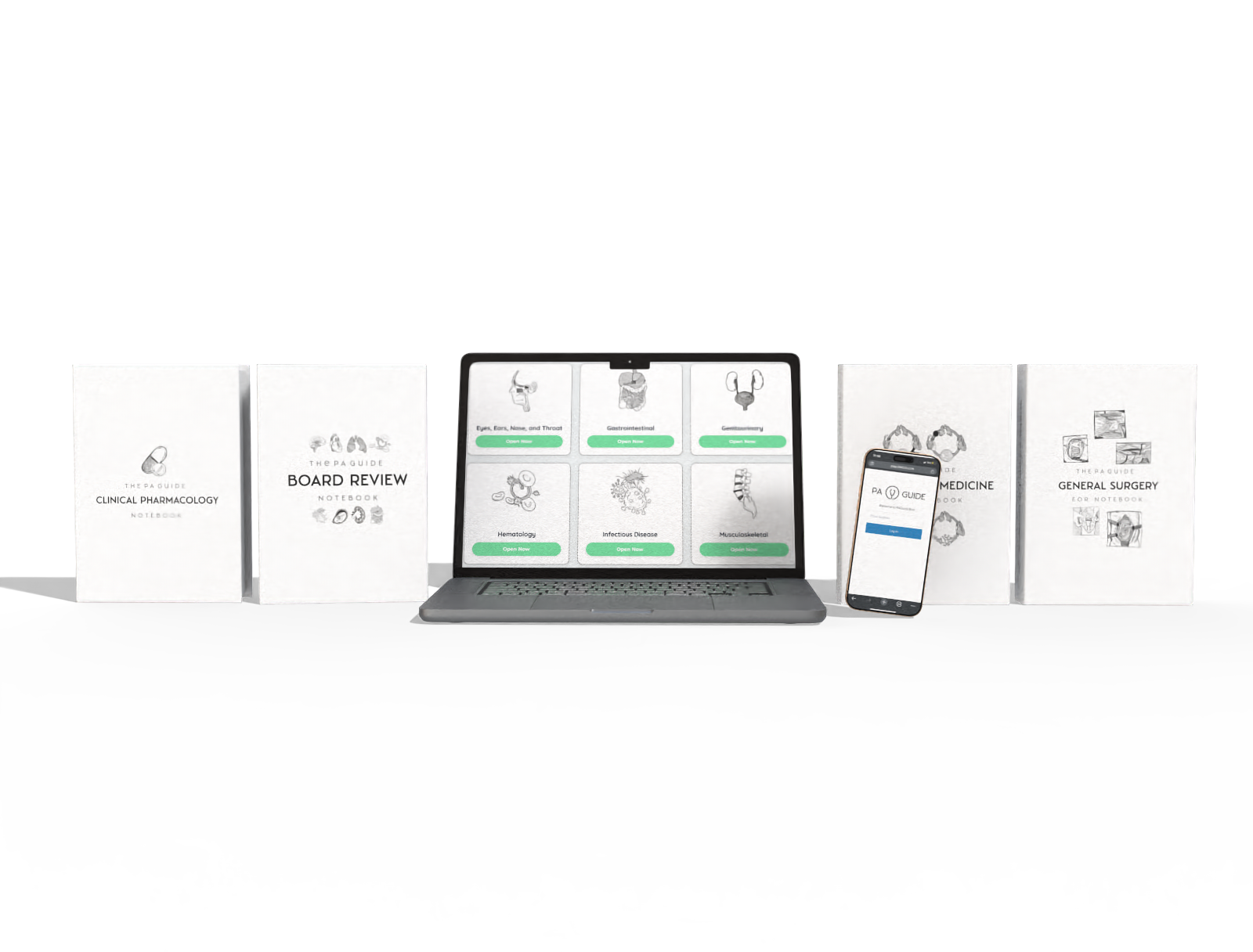
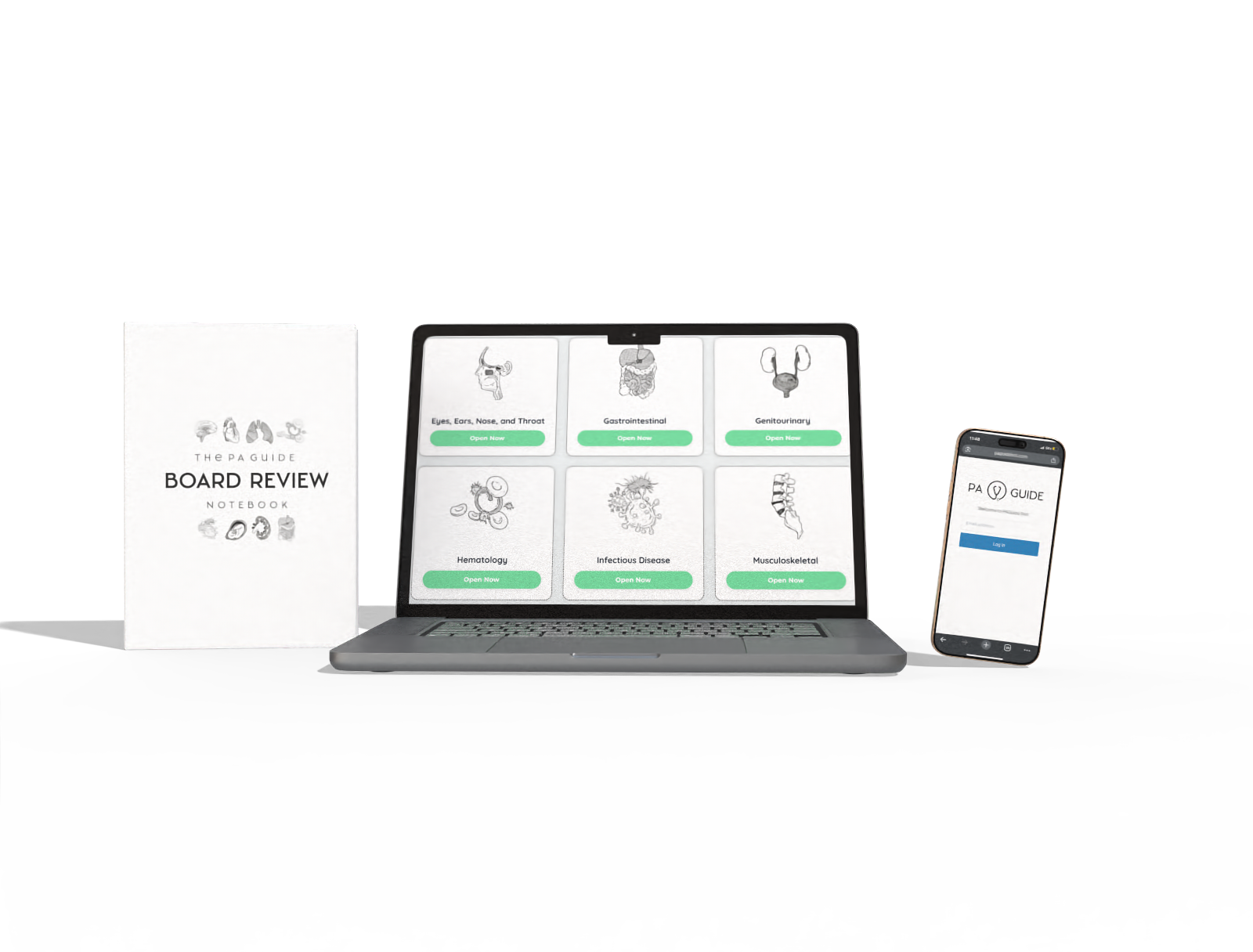
PA Guide is a structured study system for PA students who feel buried by lectures, slides, qbanks, and scattered notes. It combines a physical board review notebook, online course content, quizzes, flashcards, clinical reasoning tools, and the PA Guide Bot so your studying has a clear plan instead of turning into another pile of resources.
Who is this SOAP-note page for?
This page is for PA students who feel like the chief complaint is, “I’m drowning in PA school.” It is built for didactic-year students, clinical-year students, and anyone preparing for EOR exams, rotations, or PANCE review who needs structure, active recall, and a repeatable way to organize high-yield medicine.
How does PA Guide help if I feel overwhelmed in PA school?
PA Guide helps by giving your studying a clinical-grade structure. Instead of starting with a blank page, you use the notebook to organize high-yield concepts by system, the course to clarify what matters, and the quizzes, flashcards, AI cases, and clinical decision tools to review with active recall and clinical reasoning.
Is PA Guide a replacement for my PA program lectures?
No. PA Guide is designed to work alongside your PA program, not replace it. Your lectures, syllabi, exams, and faculty expectations still matter. PA Guide helps you turn that information into a cleaner study system so you can decide what belongs in your notes, what needs review, and how to come back to it before exams, rotations, and boards.
How is this different from a qbank?
A qbank gives you questions. PA Guide gives you a system around the questions. The goal is not just to get an answer right and move on. The goal is to organize the underlying concept, build a reusable reference, practice recall, and strengthen clinical reasoning so you understand why the next step makes sense.
How is PA Guide different from Anki or random flashcards?
Anki and flashcards can be useful, but they can also become another task to manage. PA Guide includes flashcards, but the bigger value is the structure around them: system-based notebooks, high-yield review, clinical cases, quizzes, and AI coaching that connect memorization to real clinical thinking.
Does PA Guide help with clinical rotations and EOR exams?
Yes. PA Guide is built to carry from didactics into clinical rotations and EOR exam review. The system helps you organize common conditions, medications, red flags, diagnostic patterns, and treatment frameworks so you are not rebuilding your study plan every time you move into a new rotation.
Can PA Guide help me study for the PANCE?
Yes. PA Guide is designed around board-style organization and long-term review. The notebook, system-based content, quizzes, flashcards, and clinical reasoning tools help you build a reference throughout PA school instead of waiting until the end to start a rushed PANCE prep plan.
What is the PA Guide Bot?
The PA Guide Bot is an AI clinical coach built to help students practice reasoning through medical concepts, clinical cases, and next-step decisions. It is not a replacement for faculty, preceptors, or medical judgment, but it gives you extra reps when you need help thinking through a topic instead of just rereading notes.
Will PA Guide add more work to my schedule?
The point is to reduce wasted effort, not create more busywork. PA Guide gives you a place to put what matters, a way to review it, and tools to practice recall. For many students, that means less time bouncing between resources and more time studying with a plan.
Should I choose lifetime access or monthly access?
Lifetime access is usually the best fit if you want the full PA Guide system for didactics, rotations, EOR exams, PANCE prep, and future updates without a subscription. Monthly access can make sense if you want a lower starting point while still using the notebook, course, quizzes, flashcards, and training tools.
Is there a guarantee?
Yes. PA Guide includes a 30-day money-back guarantee. If the system is not the right fit, you can email within 30 days for a refund. The goal is simple: help you replace scattered studying with a plan you can actually trust.